CDM 2015 Duty Holders Explained: Who's Responsible for What on Your Project
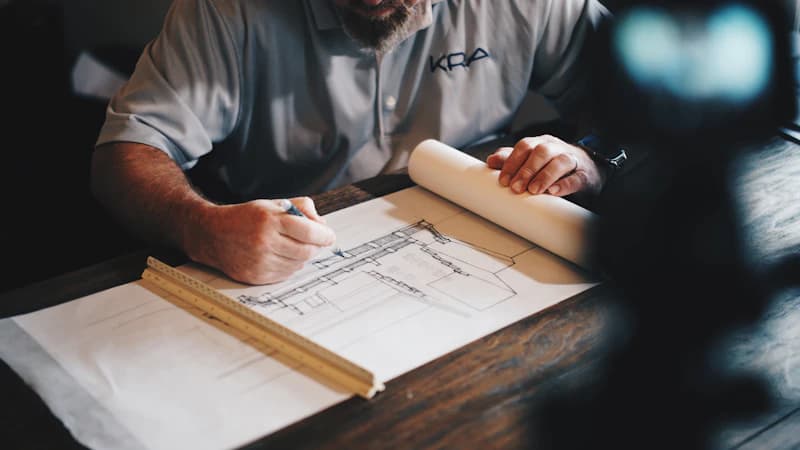
An HSE inspector turns up on your site. They ask who the Principal Designer is. Nobody knows. They ask to see the construction phase plan. It doesn't exist. Nobody can say who notified HSE about the project either. The project gets shut down, and suddenly everyone's pointing fingers.
This is what happens when CDM duty holder responsibilities aren't properly assigned, or when people assume "someone else is handling it." The Construction (Design and Management) Regulations 2015 are clear about who does what. The problem is that too many people in the chain either don't know the rules or assume they don't apply to their project.
What CDM 2015 Replaced and Why It Changed
Managing compliance in a spreadsheet?
ComplianceVault replaces the scramble. Free to get started, no card needed.
CDM 2015 replaced the CDM 2007 Regulations and the associated Approved Code of Practice. The 2007 version had a dedicated role called the "CDM Coordinator," a third-party appointment that often became a box-ticking exercise, with the coordinator operating at arm's length from the actual design and build process.
The 2015 revision scrapped the coordinator role entirely and replaced it with the Principal Designer, someone who must be actively involved in managing pre-construction health and safety, not just reviewing paperwork. The regulations also placed more explicit duties on clients, including domestic clients for the first time.
The full legislation is the *Construction (Design and Management) Regulations 2015* (SI 2015/51). HSE's guidance is published as L153. This is the go-to reference document and is freely available on the HSE website.
The Five Duty Holder Roles
CDM 2015 defines five duty holder roles. On a large commercial project, these will typically be five different organisations. On a smaller job, one person or company might hold multiple roles. But the duties still apply regardless of project size.
1. Client
The Client is the person or organisation for whom the construction work is carried out. This is the building owner, developer, or commissioning body, not the main contractor.
Client duties include:
- Making suitable arrangements for managing the project, including allocating sufficient time and resources
- Ensuring that pre-construction information is provided to designers and contractors (site surveys, existing asbestos reports, underground services, etc.)
- Appointing a Principal Designer and Principal Contractor in writing (on projects with more than one contractor)
- Ensuring a construction phase plan is drawn up before the construction phase begins
- Ensuring the health and safety file is prepared, reviewed, and kept available for future work on the structure
- Notifying HSE when required (see notification section below)
A common misconception is that clients can delegate all CDM duties to their contractor. They cannot. The client retains overarching responsibility.
2. Principal Designer
The Principal Designer (PD) must be a designer with the necessary skills, knowledge, experience, and, if an organisation, the organisational capability to fulfil the role. On most commercial projects, this is the architect or lead design consultancy.
Principal Designer duties include:
- Planning, managing, and monitoring the pre-construction phase to ensure health and safety risks are identified and addressed in the design
- Coordinating matters relating to health and safety during the design stage to ensure all designers comply with their duties
- Preparing and updating the pre-construction information pack for the Principal Contractor
- Liaising with the Principal Contractor for the duration of the PD's appointment
- Preparing and handing over the health and safety file to the client at the end of the project (or handing this duty to the Principal Contractor if the PD's appointment ends before practical completion)
The PD role is not a reviewing role. It requires active involvement in design coordination and risk elimination.
3. Principal Contractor
The Principal Contractor (PC) must be a contractor. They must actually carry out or manage construction work. On most projects, this is the main contractor or managing contractor.
Principal Contractor duties include:
- Planning, managing, and monitoring the construction phase to ensure it's carried out safely
- Preparing the construction phase plan before work begins, and updating it throughout the project
- Organising cooperation between contractors on site
- Ensuring suitable site inductions are provided
- Ensuring welfare facilities are provided from day one
- Consulting and engaging with workers on health and safety matters
- Liaising with the Principal Designer for the duration of the project
- Ensuring only authorised persons are allowed onto site
The construction phase plan must be proportionate to the project. For a large new-build, it will be a substantial document. For a smaller refurbishment with two contractors, it can be much simpler, but it must exist and it must be specific to the project.
4. Designer
A Designer is anyone who prepares or modifies a design for a construction project, or who arranges for or instructs someone else to do so. This includes architects, structural engineers, building services engineers, interior designers, and, critically, temporary works designers.
Designer duties include:
- Not starting design work unless satisfied that the client is aware of their CDM duties
- Considering the health and safety risks that their design introduces during construction, maintenance, and eventual demolition
- Eliminating hazards where possible, reducing risks where elimination isn't feasible
- Providing information about remaining risks that need to be managed by others
Designers are often unaware of the extent of their CDM responsibilities. Specifying a material that's hazardous to install, or designing a feature that can only be maintained by working at height without protection, are design decisions with CDM implications.
5. Contractor
A Contractor is any person or organisation that carries out, manages, or controls construction work. This includes subcontractors at every tier.
Contractor duties include:
- Not starting work unless satisfied that the client is aware of their duties and that a construction phase plan has been prepared
- Planning, managing, and monitoring their own work and that of any workers under their control
- Ensuring workers under their control have the right skills, knowledge, training, and experience
- Providing appropriate supervision, instructions, and information to workers
- Not employing anyone who isn't competent for the task
- Cooperating with the Principal Contractor and other contractors
Every contractor on a CDM project has duties, no matter how small their package of work. A one-person electrical subcontractor has the same legal obligations as a large groundworks firm.
Domestic Clients: Different Rules
A domestic client is someone who has construction work done on their own home (or the home of a family member) and the work is not connected to a business. Under CDM 2015, domestic clients have the same duties as commercial clients, but those duties are automatically transferred:
- If a Principal Contractor is appointed, the PC takes on the client duties
- If no Principal Contractor is appointed, the contractor in control of the work takes on the client duties
- If a Principal Designer is appointed, the PD takes on client duties during the pre-construction phase
This means domestic clients don't need to actively manage CDM compliance themselves, but the duties still exist and someone must fulfil them. If you're a contractor working for a homeowner, you're likely holding the client's CDM duties whether you realise it or not.
When You Must Notify HSE
You must notify HSE using the F10 notification form before the construction phase begins if the project:
- Will last longer than 30 working days and have more than 20 workers on site at any one time, or
- Exceeds 500 person-days of construction work
Notification is done online through the HSE website and is the client's duty (or the Principal Designer or Principal Contractor on behalf of the client). The F10 must be displayed on site throughout the project.
Many projects that don't seem large enough to require notification actually do when you calculate the person-days. A four-person team working for 26 weeks exceeds 500 person-days.
Common CDM Compliance Failures
These are the issues that HSE inspectors and enforcement notices most frequently identify:
- No Principal Designer appointed: The client assumed the architect was "doing it" but never formally appointed them in writing.
- No construction phase plan: The Principal Contractor started work without one, or produced a generic template that doesn't reflect the actual project risks.
- Design risk not considered: Designers specified materials or details without thinking about how they'd be built, maintained, or replaced safely.
- No pre-construction information provided: The client didn't share known risks (asbestos surveys, contaminated land reports, underground services plans) with the design team.
- Failure to notify HSE: The F10 wasn't submitted, or was submitted late.
- Assuming CDM doesn't apply: Some contractors believe CDM only applies to large projects. It applies to all construction work in Great Britain, regardless of size.
Keeping track of who holds which CDM role, what documents have been produced, and whether notifications have been made is straightforward on a single project, but across multiple live jobs it gets complicated quickly. ComplianceVault's project tracking tools let you assign duty holders, track key documents like the construction phase plan and F10 notification, and flag gaps before an inspector does.
How Smaller Contractors Are Affected
If you're a small contractor, even a sole trader, CDM 2015 applies to you. The regulations don't have a small-project exemption. What changes is the proportionality of what's required.
On a single-contractor project (no other contractors involved), there's no requirement to appoint a Principal Designer or Principal Contractor. But the contractor still has duties, the client still has duties, and a construction phase plan is still needed if the work involves particular risks.
The HSE's position, set out in L153 and supporting guidance, is that compliance should be proportionate. A short method statement covering the key risks may suffice as a construction phase plan on a simple job. But "proportionate" doesn't mean "optional." For practical guidance on writing risk assessments that meet CDM requirements, see our guide to construction risk assessments.
For more on the financial and legal consequences of getting this wrong, see our guide on the cost of non-compliance in UK construction.
Related articles


Get compliance tips in your inbox
New guides and checklists delivered when we publish. No spam.
Manage your compliance with ComplianceVault
Store evidence, track expiries, and share compliance packs. Free to get started.